Seat Belt Assemblies
Everything a seat position needs, arriving together and already matched: webbing, latch tongue, buckle and stalk, anchor hardware and — where the format calls for one — the retractor.
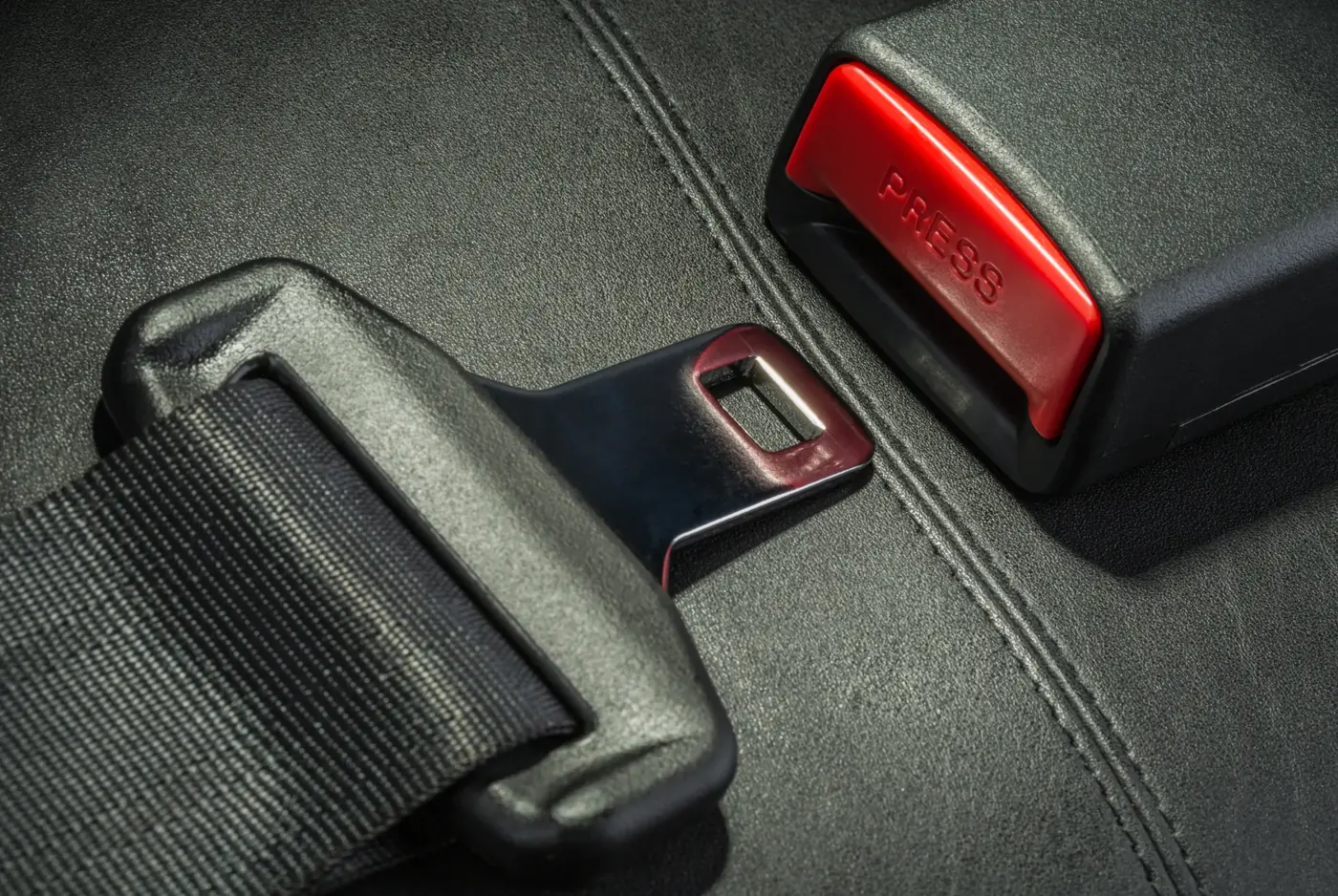 Tongue & buckle, unlatched
Why the complete set removes the commonest failure in restraint work
A seat belt assembly is a matched group of parts sold and fitted as one item. At minimum that means the webbing, the latch tongue that runs on it, the buckle and stalk the tongue engages with, and the anchor hardware that fixes the whole arrangement to the seat or structure. Where the position uses one, the retractor comes as part of the same set.
The reason to buy the set rather than the pieces is straightforward. By far the most frequent problem we see in restraint repairs is a tongue and buckle that do not properly belong to each other. They may click. They may hold under a hand pull. But the tongue was not designed for that buckle, the engagement is not what either part intended, and the release behaviour can be unpredictable. Supplying them as a matched pair makes that entire class of problem impossible.
Assemblies also simplify fitting. One part number, one set of hardware, one interface to verify. For body builders, seat manufacturers and workshops handling several vehicles a week, that consistency is usually worth more than the small saving of buying components separately.
Key features
- Matched tongue and buckle — engagement geometry and release behaviour are designed together rather than assumed compatible
- Two-point and three-point formats — static lap belts and full diagonal-plus-lap assemblies, chosen against the anchorage layout
- Anchor hardware included — bolts, plates, bushes and spacers supplied with the set so nothing is missing at fitting
- Retractor integrated where required — supplied already matched to the webbing length and mounting orientation of the position
- Single part number — one item to order, one item to check in, one item to record against a fleet specification
- Checked as a working unit — latching and release are tested on the assembled set, not on the parts in isolation
The assembly, part by part
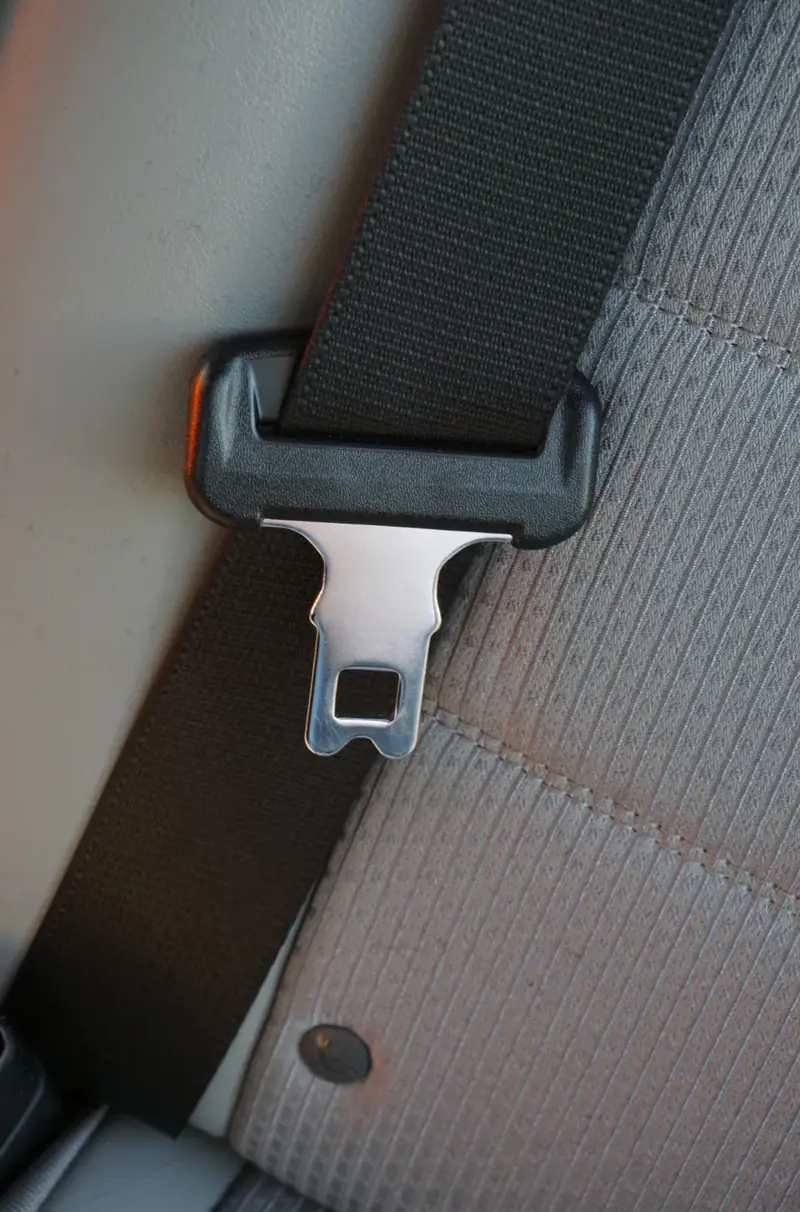
The same set shown laid out, engaged under load, and at the anchor point — the three views that between them answer most fitment questions.
SELECT AN IMAGE
Images are representative of the product family. The exact item supplied is confirmed against your fitment before dispatch.
Where complete assemblies make the most sense
Assemblies are worth the small premium wherever consistency matters more than component-level flexibility.
Vehicle body building
New seating positions created during a build have no original belt to match, so the whole assembly is specified from the anchorage layout upward.
Seat manufacture
Belts integrated into a seat frame during production, where the assembly and the seat are designed to interface as one unit.
Workshop replacement
Where the existing belt is damaged and the buckle is worn, replacing both together is faster and removes any matching doubt.
Fleet standardisation
One assembly specification applied across a fleet makes stockholding, training and future replacement dramatically simpler.
Industrial seating
Operator seats and static workstations frequently use two-point assemblies with seat-mounted anchorages rather than structure-mounted ones.
Restoration work
Older vehicles where the original assembly is no longer available and a correctly suited modern equivalent is needed.
Specifying an assembly from scratch
When there is no existing belt to copy, the assembly is built up from the anchorage arrangement outward.
Fix the anchorage layout first
Two-point or three-point, and exactly where the mounting points sit. This single answer eliminates most of the catalogue before any other question is asked.
Decide seat-mounted or structure-mounted
A seat-mounted assembly moves with the seat; a structure-mounted one does not. The distinction changes webbing lengths and the geometry the belt has to work through.
Establish whether a retractor belongs there
Static belts are simpler and entirely appropriate for many industrial positions. Retractors are expected wherever the occupant needs freedom of movement with the belt still fastened.
Confirm the hardware interface
Bolt thread and length, stalk length and mounting orientation. These are the details that decide whether the set installs in twenty minutes or does not install at all.

A note on responsibility
Requirements vary by vehicle, equipment and application. Where a manufacturer specifies particular restraint parts, torque values or fitting procedures for a position, that guidance should be followed and the work carried out by a competent technician. We supply components and help you identify what suits a fitment; we do not inspect your vehicle, and nothing on this page substitutes for a professional assessment of it.
Related product families
Automotive Seat Belts
Front and rear belts for cars, vans and light commercials where a full assembly is not required.
Retractor Systems
The spool and locking mechanism that forms part of most three-point assemblies.
Seat Belt Components
Individual buckles, tongues, anchor plates and hardware for component-level repair.
Specifying a complete assembly?
Tell us the anchorage layout, whether the mounting is on the seat or the structure, and how much belt travel the position needs. We will build the specification with you.