Retractor Systems
The mechanism that stores the webbing, keeps it lying against the occupant without slack, and locks the spool when it senses sudden movement. Supplied to match spool capacity, locking behaviour and mounting orientation.
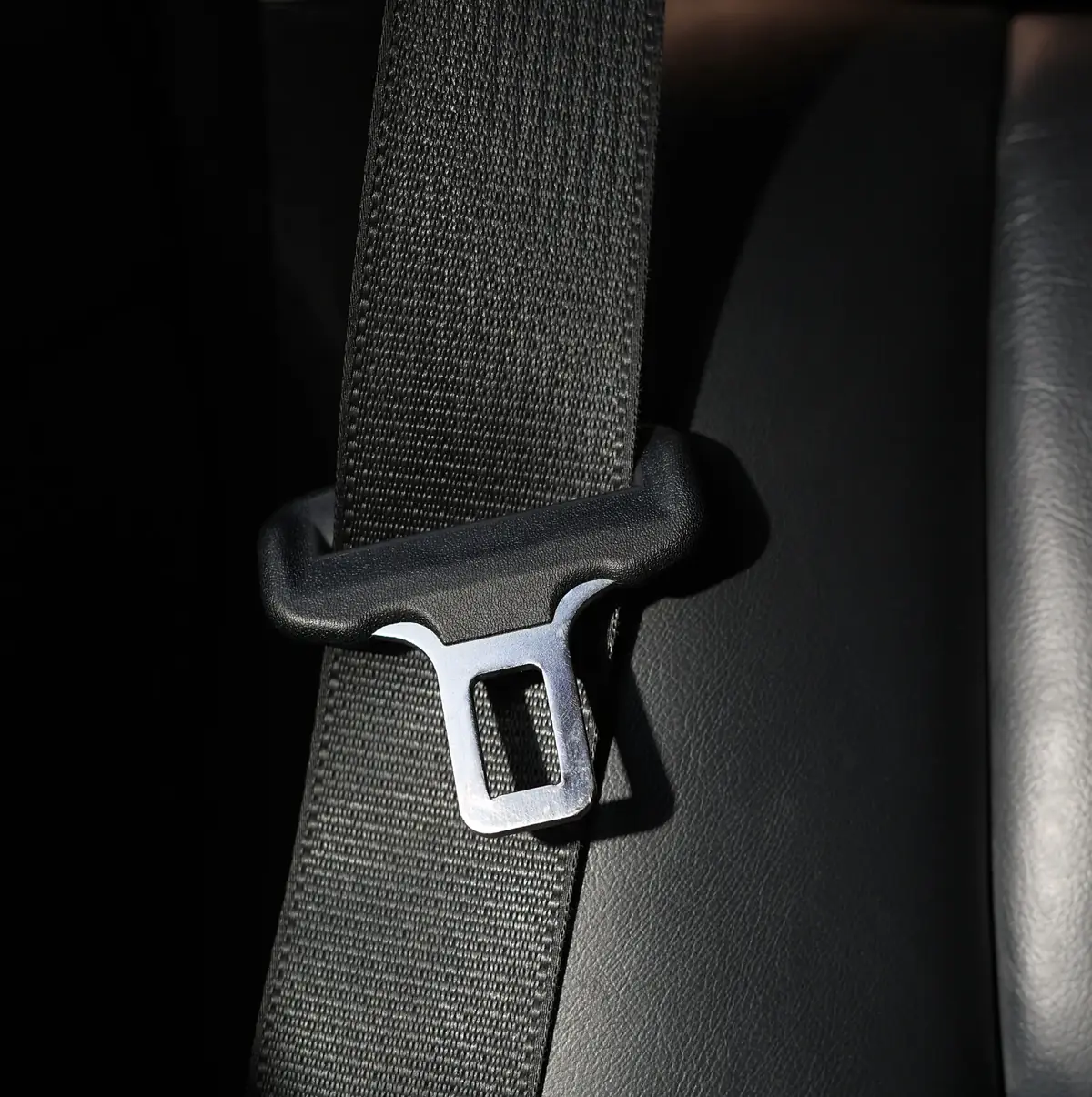 Webbing path & loop
What a retractor actually does, and why orientation matters
A retractor is a spring-loaded spool with a locking mechanism attached. The spring keeps gentle tension on the webbing so the belt lies against the occupant rather than hanging slack, and takes up webbing again when the belt is released. The locking mechanism is what makes it a restraint rather than a tidy storage device: under sudden webbing extraction or sudden vehicle deceleration, it stops the spool from paying out further.
Two behaviours are commonly described. An emergency locking retractor (ELR) allows the occupant to move normally and locks only when it senses a rapid event — this is the behaviour most people recognise from everyday driving. An automatic locking retractor (ALR) can be switched into a mode where webbing only retracts and will not pay back out until fully released, which is the behaviour typically used when securing something firmly in place.
The practical consequence for supply is that a retractor cannot be treated as a generic box. Spool capacity has to hold the webbing length the position needs. Locking behaviour has to match what the position was designed around. And mounting orientation matters a great deal — a mechanism that senses movement relative to its own body will not sense what it was designed to sense if it is fitted rotated from its intended plane.
Key features
- Locking behaviour matched — emergency-locking and automatic-locking formats supplied according to the position, not substituted for convenience
- Spool capacity checked — against the webbing length the seat travel actually demands, including at full extension
- Mounting orientation specified — so the mechanism sits in the plane it was designed to sense movement in
- Retraction action tested — webbing pays out smoothly, returns fully and locks cleanly under a sharp pull before dispatch
- Supplied standalone or in assembly — as a replacement mechanism, or already matched into a complete belt assembly
- Webbing condition inspected — edge wear, fraying and stiffness examined along the full extracted length, not just the visible section
The retractor in operation
A retractor is judged by how it behaves rather than how it looks — smooth extraction, complete return, and a clean lock under a sharp pull.
SELECT AN IMAGE
Images are representative of the product family. The exact item supplied is confirmed against your fitment before dispatch.
Where retractor systems are specified
Retractors are expected wherever an occupant needs freedom of movement with the belt still fastened.
Passenger vehicle positions
Front and rear outer positions in cars and SUVs, where emergency-locking behaviour and full webbing return are taken for granted.
Commercial vehicle cabins
Driver and co-driver positions in goods and passenger vehicles, with higher daily cycle counts and correspondingly faster mechanism wear.
Bus and coach seating
Rows of identical positions where standardising on one retractor specification greatly simplifies maintenance.
Retrofit programmes
Adding retractor-based belts where static belts were previously fitted, which requires the mounting plane to be established carefully.
Rebuild and restoration
Replacing a mechanism that has slowed, stopped returning fully, or no longer locks reliably under a sharp pull.
High-cycle fleet use
Taxi, ride-hail and driving-school vehicles where retraction is the first behaviour to degrade noticeably.
Choosing the right retractor
Three variables carry almost all the weight; the rest follow from them.
Establish the locking behaviour required
Whether the position was designed around emergency locking or a switchable automatic-locking mode. Substituting one for the other changes how the belt behaves in ordinary use.
Match spool capacity to belt travel
Run the seat to its furthest and most reclined setting and establish the webbing length required there. A spool sized for mid-position leaves you short at the extreme.
Confirm the mounting plane and angle
Retractors sense movement relative to their own mounting. Fitting one rotated from its intended plane can change or defeat the sensing it was designed to perform.
Check the webbing exit and routing
Where the webbing leaves the retractor and how it routes to the pillar loop or anchor. Poor routing causes drag, incomplete return and premature edge wear.
A note on responsibility
Requirements vary by vehicle, equipment and application. Where a manufacturer specifies particular restraint parts, torque values or fitting procedures for a position, that guidance should be followed and the work carried out by a competent technician. We supply components and help you identify what suits a fitment; we do not inspect your vehicle, and nothing on this page substitutes for a professional assessment of it.
Related product families
Seat Belt Assemblies
Complete matched sets in which the retractor arrives already paired to the correct webbing length.
Automotive Seat Belts
Front and rear belts for cars, vans and light commercials, most of which are retractor-based.
Seat Belt Components
Pillar loops, anchor plates and mounting hardware that shape how webbing routes to and from the retractor.
Replacing or specifying a retractor?
Tell us how much belt travel the position needs, how the mechanism mounts, and how the existing unit behaves. Those three answers usually settle the specification.