Understanding Seat Belt Retractors
The retractor is the least understood part of a seat belt and the part most likely to be quietly failing. This guide explains what is inside it, why a belt pays out smoothly but grabs when tugged, what ALR and ELR actually mean, and why mounting orientation is not a cosmetic detail.
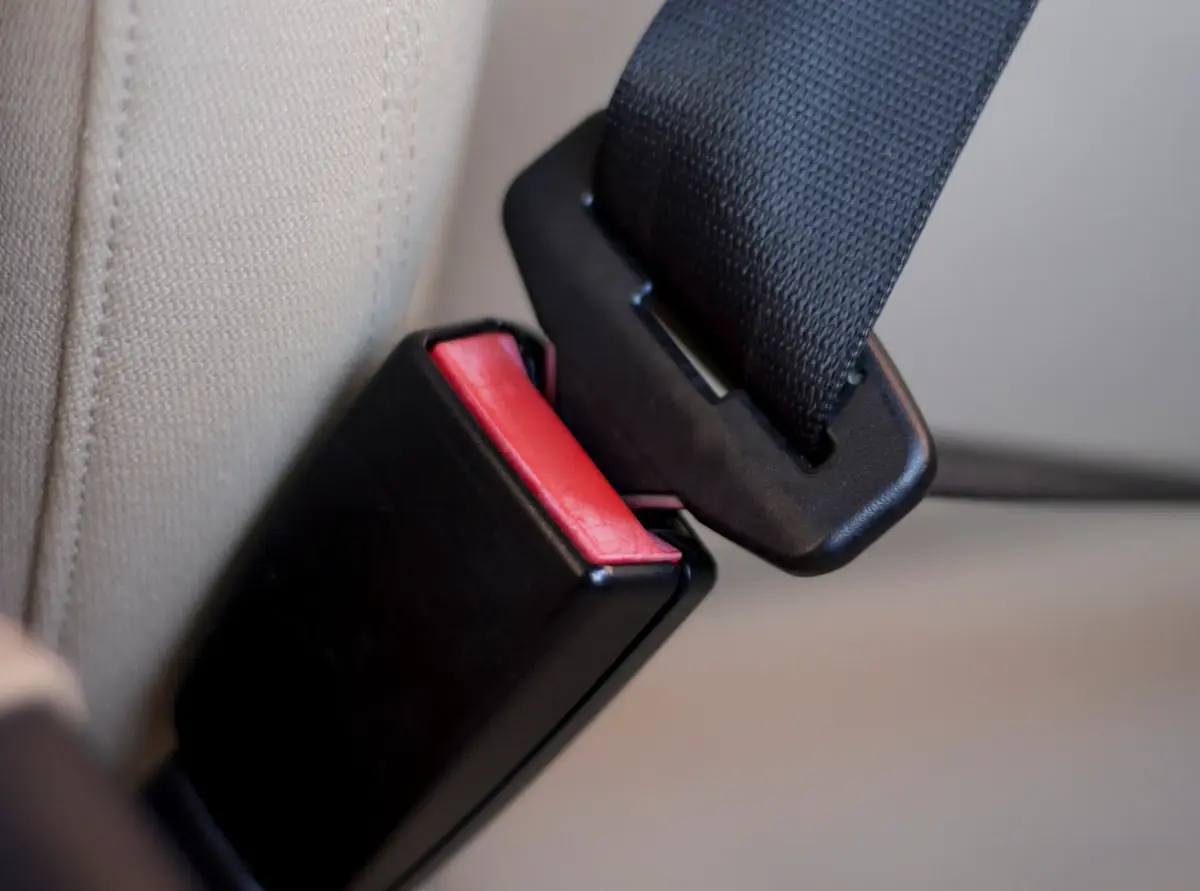 Mechanism
Ask most people what a seat belt retractor does and you will get an answer about tidiness — it rolls the belt up when you are finished with it. That is true, and it is the least important thing the retractor does. The mechanism inside is also responsible for keeping the belt lying against the occupant without slack, and for locking the spool when it senses that something has gone wrong.
For anyone specifying or maintaining belts, the retractor deserves disproportionate attention for a simple reason: it is the part that degrades most gradually and most invisibly. Webbing damage is visible. A cracked buckle is obvious. A retractor that has slowed by twenty per cent over three years announces nothing at all — and the first noticeable symptom, a belt that hangs slack instead of lying flat, is easy to live with and easy to ignore.
What is inside a retractor
Strip a retractor to its functional elements and there are three.
- The spool. A shaft the webbing winds onto. Its capacity determines how much webbing the unit can store, which in turn determines how much belt travel the position can have.
- The return spring. A coiled spring that applies light, constant torque to the spool. It is deliberately weak — strong enough to take up slack and draw the belt home, gentle enough that an occupant does not feel dragged back into the seat.
- The locking mechanism. The part that makes it a restraint component rather than a storage reel. It senses particular conditions and prevents the spool from paying out further webbing.
Everything else — housing, mounting bracket, webbing guide — exists to hold those three in the right relationship to each other and to the vehicle.
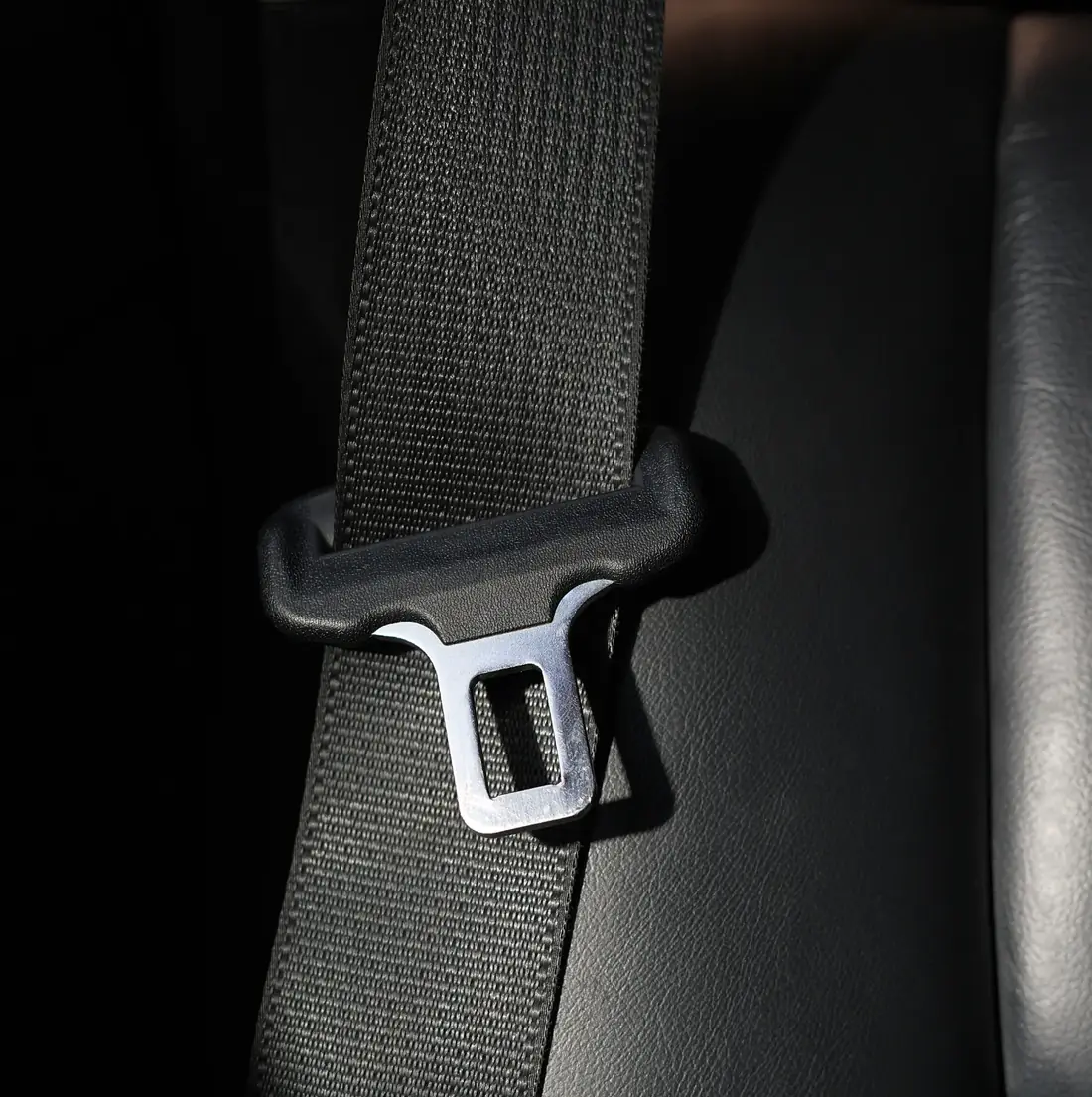
Why it pays out smoothly but grabs when tugged
This is the behaviour everyone has noticed and few have had explained. Retractor locking mechanisms are generally described as responding to one or both of two triggers.
Webbing-sensitive locking. The mechanism monitors how quickly webbing is being drawn off the spool. Below a threshold rate it does nothing and the belt pays out freely. Above that rate — a sharp tug, or the rapid extraction that would accompany an occupant moving forward suddenly — it engages and stops the spool. This is what you are demonstrating when you yank the belt and feel it grab.
Vehicle-sensitive locking. The mechanism responds to the vehicle’s own movement rather than to the webbing. Typically an inertial element sits in a defined orientation and displaces when the vehicle decelerates or tilts beyond a threshold, engaging the lock. This is why a belt can lock while you are reaching forward slowly on a steep slope, or during firm braking even though you were not moving quickly against the belt.
Many retractors combine both. The practical significance is that a mechanism sensing the vehicle’s movement can only do so correctly if it is mounted in the orientation it was designed for — a point we return to below, because it is the single most consequential thing to get right when replacing one.
ELR and ALR: what the terms mean in practice
Two abbreviations come up constantly in retractor specifications, and they describe modes of behaviour rather than brands or grades.
| Mode | Behaviour | Where it is used |
|---|---|---|
| ELR Emergency locking retractor | Webbing pays out and retracts freely during normal use; the spool locks only when the mechanism senses a triggering event. | The everyday behaviour in most road-vehicle seating positions, where the occupant needs freedom to move while belted. |
| ALR Automatic locking retractor | Once engaged in this mode, webbing will retract but will not pay back out until it has been allowed to return fully, at which point the mode resets. | Where something needs to be held firmly in position rather than allowed to move, and where a ratcheting take-up behaviour is wanted. |
| Switchable | Behaves as an emergency locking retractor until fully extracted, then changes to automatic locking behaviour for that cycle. | Positions that need both behaviours at different times, selected by how far the belt is drawn out. |
These behaviours are not interchangeable on preference. A position designed around emergency locking will feel wrong with automatic locking fitted — the belt will ratchet progressively tighter as the occupant moves — and that is not a comfort complaint to work around but a sign the wrong mode has been supplied.
Why mounting orientation matters so much
If there is one thing to take from this guide, it is this. A retractor that senses vehicle movement does so relative to its own body. The mechanism is designed on the assumption that it will be mounted in a particular plane and at a particular angle, and its sensing element is calibrated around that assumption.
Mount a retractor rotated from its intended plane and you have not made a cosmetic change. You have changed what the sensing element experiences during the events it exists to detect.
This is why replacing a retractor is not simply a matter of finding one that bolts on. The bracket must hold it in the plane the mechanism expects, and the mounting angle must match. When we ask how a retractor is currently mounted — and we always ask — this is the reason.
It also matters in retrofit work. Adding retractor-based belts to a position that previously used static belts means establishing a mounting arrangement that did not previously exist, and orientation is the part of that job most likely to be got wrong by someone working from availability rather than from specification.
Spool capacity and belt travel
The second variable that decides whether a retractor suits a position is how much webbing it can hold and pay out. This has to be assessed against the position’s real requirement, not its typical one.
- Run the seat to its extremes. Furthest rearward, most reclined, and with the height adjustment at its least favourable setting. That combination — not the mid-position anyone actually drives in — defines the webbing length the position needs.
- Account for the occupant. A belt sized around one build may be marginal for another. Where a vehicle is used by many different people, the requirement is set by the most demanding case.
- Include the routing. Webbing consumed getting from the retractor to the pillar loop and across to the buckle is webbing not available to the occupant.
A retractor whose spool capacity is marginal will feel fine in ordinary use and run out at exactly the moment the seat is at full extension — which is a fault that only appears for some drivers, some of the time, and is consequently very easy to miss during a workshop check.
Recognising a retractor that is failing
Retractor degradation is gradual, which means it is usually noticed as an accumulation of small annoyances rather than as a fault. Any of the following is worth having assessed by a competent technician.
- Incomplete return. The belt stops short and has to be guided the last part of the way. Usually the earliest reliable indicator.
- Sluggish or stalling retraction. The belt returns but slowly, or stops and restarts, suggesting either a tiring spring or drag in the webbing path.
- Failure to lock under a sharp pull. If a firm tug no longer produces a crisp stop, that is a functional finding and not a matter of feel.
- Locking when it should not. A retractor that grabs during ordinary gentle movement may be mis-mounted, damaged, or responding to something in the webbing path.
- Audible change. Grinding, rattling or a distinctly different sound during extraction and return.
Before concluding the mechanism is at fault, it is worth ruling out the webbing path. A roughened pillar loop, a twist in the belt, or debris where the webbing enters the housing can all produce symptoms that look exactly like a tired retractor and are considerably cheaper to fix.
Frequently asked
It is a sign worth acting on rather than a verdict in itself. Slow or incomplete retraction can indicate a weakening return spring, drag in the webbing path from a worn pillar loop or a twist, or a mechanism that is beginning to tire. Whichever it is, the practical consequence is that the belt tends to sit slack rather than lying against the occupant. Have it examined by a competent technician who can establish the cause.
Retractors are sealed mechanisms and are not a component to open up and adjust. Where the fault turns out to be in the webbing path rather than the mechanism — a worn loop, a twist, debris at the housing entry — that is fixable. Where the mechanism itself has degraded, replacement with a correctly specified unit is the appropriate route.
That is consistent with vehicle-sensitive locking behaving as designed. Retractors that respond to the vehicle’s own movement typically use an inertial element that displaces when the vehicle tilts or decelerates beyond a threshold. On a steep enough slope, the tilt alone can be sufficient to engage the lock. Letting the belt retract fully and drawing it out again usually resets it.
The variables that must match are spool capacity, locking behaviour and mounting orientation. A unit that shares those three and interfaces correctly with the webbing and bracket may be suitable; one that differs in any of them probably is not, however similar it looks. Where a vehicle or equipment manufacturer specifies a particular part for a position, that guidance should be followed.
No — it is a different design choice, and in many industrial and operator seating positions it is entirely appropriate. Retractors exist to give an occupant freedom of movement while belted. Where an operator does not need that freedom, a static belt is simpler, has fewer failure modes and needs less maintenance. What matters is that the format matches how the position was designed.
A note on scope
This is general explanatory material, written from working familiarity with seat belt products. It is not a repair procedure for any specific vehicle or machine. Requirements vary by vehicle and application, and users should consult relevant manufacturer guidance for their own equipment. Anything you are unsure about should be referred to a competent technician who can examine the system directly.
Related articles
 Fundamentals
What Is a Seat Belt System and How Does It Work?
Every part in the chain, what each one does, and how they behave together during normal use and sudden deceleration.
Read Article Formats
Different Types of Seat Belt Assemblies
Two-point, three-point, static and retractor formats — what each one is for, and where substituting one for another causes problems.
Read Article Selection
Factors to Consider When Selecting Seat Belt Components
The measurements and answers that decide whether a part fits — and the assumptions that most often cause a belt to arrive wrong.
Read ArticleReplacing a retractor?
Tell us the belt travel the position needs, how the unit mounts, and how the existing one behaves. Those three answers usually settle the specification in one exchange.