What Is a Seat Belt System and How Does It Work?
A seat belt looks like one object and behaves like a system. This guide walks through every part in the chain, explains what each one is responsible for, and describes how they behave together — both in the thousands of ordinary uses and in the one event they exist for.
 Fundamentals
Most people have used a seat belt tens of thousands of times without ever thinking about what is happening inside it. That is a compliment to the design: a well-functioning restraint is almost entirely invisible in ordinary use. But if you specify, fit or maintain belts for a living, that invisibility becomes a problem — it makes it easy to treat the assembly as a single commodity part rather than as a chain of components, each of which can fail in its own way.
This guide takes the system apart. It covers the six functional elements, what each contributes, how they interact during a normal buckle-and-release cycle, and what changes during rapid deceleration. Where a claim would require test data we do not hold, we describe the mechanism rather than assert a figure.
The six parts of a seat belt system
Almost every belt you will encounter — automotive or industrial, two-point or three-point — is built from the same six functional elements. The formats differ in how those elements are arranged, not in what they are.
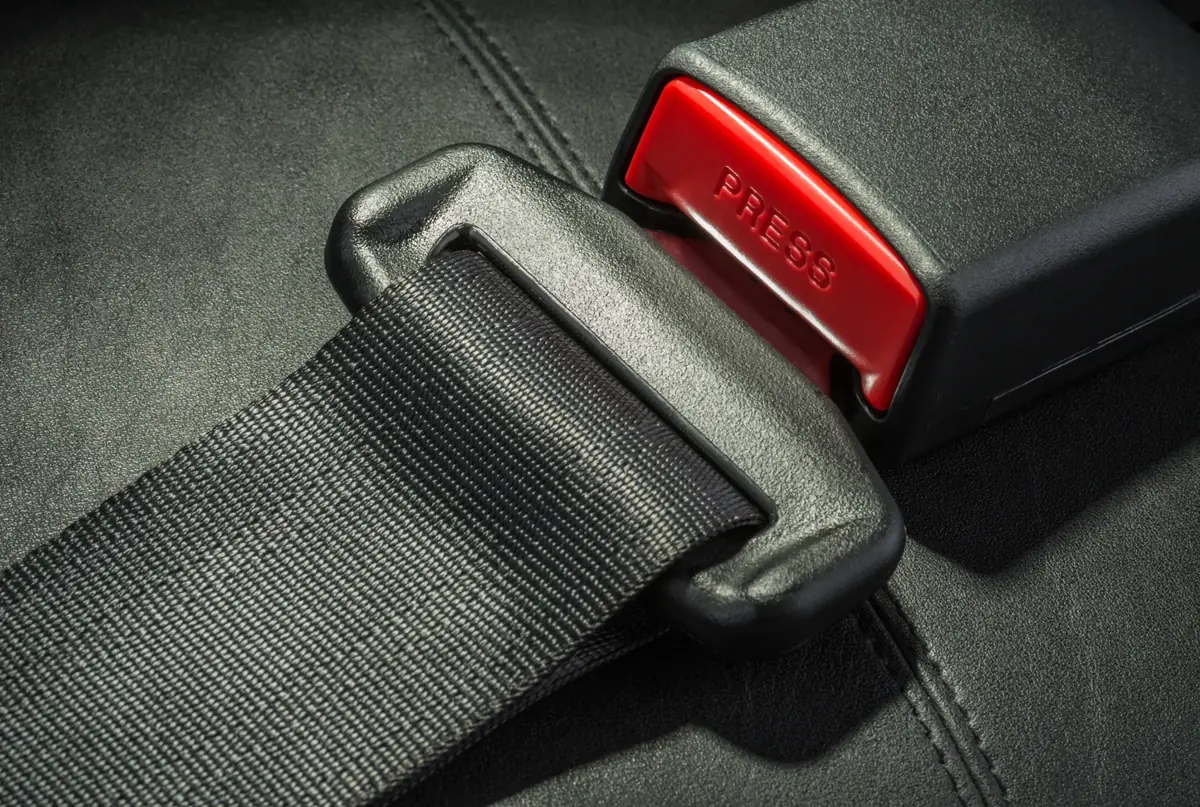
- Webbing. The woven strap itself, and the only part that carries load along its length. It is designed to be strong in tension while remaining flexible enough to lie against an occupant comfortably. Webbing is also the part most exposed to the outside world, and therefore the part most affected by sunlight, abrasion, chemicals and heat.
- Latch tongue. The metal plate that runs on the webbing and inserts into the buckle. On a three-point belt it usually slides freely along the webbing, which is what lets one continuous strap serve as both a lap section and a diagonal section.
- Buckle and stalk. The receptacle the tongue locks into, and the short strap or rigid arm that mounts it. It holds the tongue against load and releases it when the button is pressed — and only then.
- Retractor. A spring-loaded spool with a locking mechanism. It stores webbing, keeps light tension on the belt so it lies against the occupant, and locks the spool under sudden movement.
- Anchorages. The fixing points that connect the assembly to the seat frame or the vehicle structure, together with the plates, bolts and bushes that make those connections.
- Guides and trim. Pillar loops, webbing guides and the moulded covers that shape the belt’s path and protect the hardware. They look cosmetic and are not — a worn guide drags on webbing and degrades retraction.
What happens during ordinary use
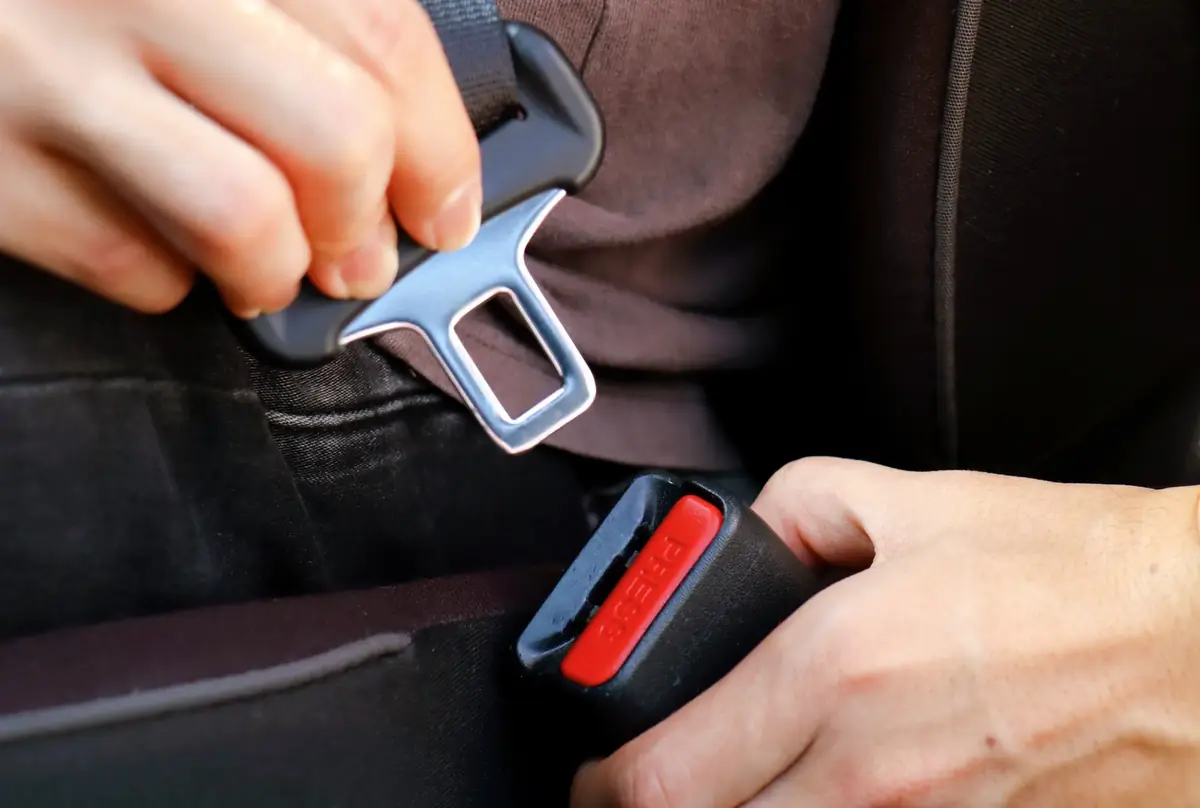
Follow a single buckle-and-release cycle and the interaction between the parts becomes clear.
Drawing the belt out. Pulling the tongue extracts webbing from the retractor spool against light spring pressure. Pull steadily and it pays out freely; pull sharply and the locking mechanism engages and stops it — which is the same behaviour that will matter in an emergency, demonstrated at low stakes. The webbing passes through the pillar loop, which redirects it from wherever the retractor is mounted to a position across the occupant’s shoulder.
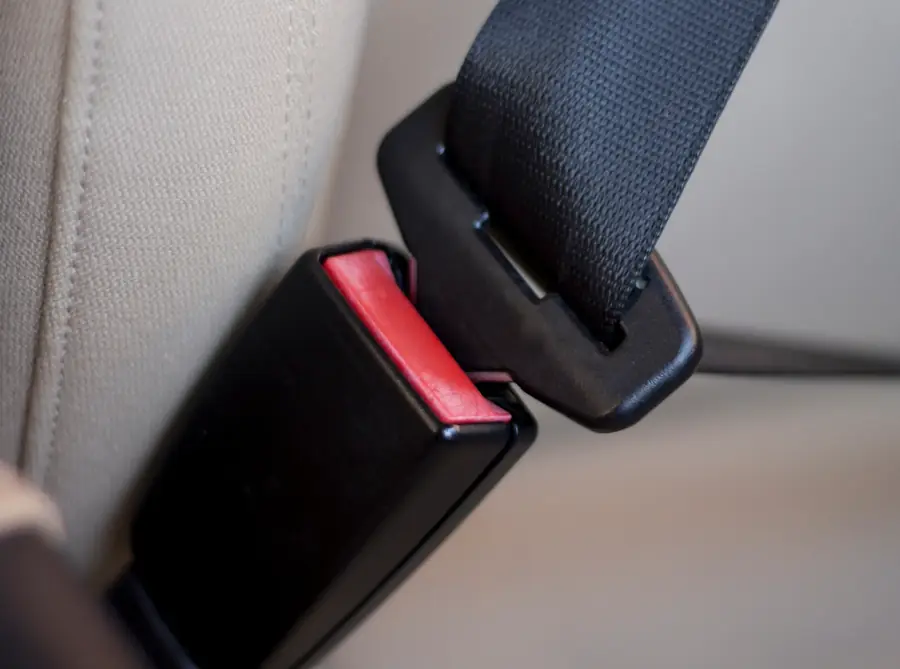
Latching. The tongue enters the buckle and a locking element engages a slot or profile in the plate. A correct engagement is positive and repeatable: the same firm click every time, and the tongue cannot be withdrawn without pressing the release. A tongue that seats loosely, engages inconsistently, or can be pulled free without the button is not correctly matched to that buckle.
Settling. With the belt latched, the retractor spring takes up the slack. On a three-point belt the sliding tongue lets webbing distribute between the lap section and the diagonal section, so the belt finds its own position across the occupant rather than being adjusted manually.
Releasing. Pressing the button withdraws the locking element and frees the tongue. The retractor then draws the webbing back onto the spool. Full, unassisted return is worth paying attention to, because incomplete return is usually the earliest observable sign of either a tiring mechanism or drag somewhere in the webbing path.
What changes during sudden deceleration
An occupant travelling in a vehicle is travelling at the vehicle’s speed. If the vehicle decelerates rapidly, the occupant continues at their previous speed until something applies force to change it. The purpose of a restraint is to be that something, applied across parts of the body better able to tolerate the load, and applied progressively rather than abruptly.
The locking mechanism in the retractor is what makes this possible. Retractors sense either rapid webbing extraction, rapid vehicle deceleration, or both, and lock the spool so no further webbing pays out. Once locked, the load travels along the webbing to the anchorages and into the structure — which is why the chain framing matters so much. Webbing, stitching, tongue, buckle, retractor, anchor bolts and the structure they thread into all carry the same event together.
A restraint is only as capable as its weakest element — and the weakest element is frequently not the one you were looking at.
This also explains why anchorage condition deserves the same attention as webbing condition. Sound webbing bolted to a corroded mounting point is not a partly functioning restraint; it is an assembly whose load path terminates in something uncertain.
How the same parts make different formats
Rearrange the six elements and you get the formats seen in service.
| Format | Arrangement | Typically used where |
|---|---|---|
| Two-point static lap | Webbing across the hips only, fixed length, no retractor | Industrial and operator seating, some centre-rear positions |
| Two-point retractor lap | Lap-only webbing fed from a retractor | Positions needing lap restraint with automatic take-up |
| Three-point lap and diagonal | Single strap, sliding tongue, retractor, three anchorages | Most road-vehicle outer positions, front and rear |
| Multi-point arrangements | Additional straps converging on a central buckle | Specialised seating and purpose-built applications |
The important consequence for anyone ordering parts is that these formats are not interchangeable by preference. A position designed around a three-point arrangement has anchorage geometry that assumes three load paths. Fitting a two-point belt because it is available changes what the position does, and is not a decision to take on convenience grounds. Our guide on different types of seat belt assemblies covers this in more depth.
How each part tends to fail
Knowing the failure mode of each element makes inspection far more productive than looking at a belt in general terms.
- Webbing — edge fraying where it passes through loops, cuts and abrasion, fading and stiffening from ultraviolet exposure, and localised damage from chemicals or heat.
- Stitching — loosening or breaking at load-bearing joins, which undermines two otherwise sound parts on either side of it.
- Latch tongue — bending, burring or scoring, all of which degrade how cleanly it engages and can abrade the webbing running on it.
- Buckle — debris ingress increasing release force, wear in the locking element, and cracked housings letting more debris in.
- Retractor — weakening return spring, slowing or incomplete retraction, and locking that no longer engages crisply under a sharp pull.
- Anchorages — corrosion, loosening fasteners and damage to the mounting point itself, all of which are easy to overlook because they are usually hidden behind trim.
- Guides and trim — roughening surfaces that drag on webbing, cracking that exposes hardware, and breakage that changes the belt’s path across the occupant.
For a step-by-step way to work through these, see our guide on general seat belt inspection awareness.
Frequently asked
That is the retractor’s locking mechanism working as designed. Retractors are built to allow smooth, gradual webbing extraction so an occupant can move normally, and to lock the spool when they sense rapid extraction or rapid vehicle deceleration. Feeling it grab under a sharp tug is a useful, no-cost confirmation that the mechanism is still responding.
On most three-point belts, yes. A freely sliding tongue is what allows one continuous strap to serve as both the lap section and the diagonal section, letting webbing distribute between the two so the belt finds its own position across the occupant. If a tongue that used to slide has become stiff, that is worth having looked at — it usually points at a burr on the tongue or damage to the webbing.
They are designed to do different things, and the honest answer is that the appropriate format depends on the position and how it was designed. Three-point arrangements restrain both the pelvis and the upper body; two-point lap belts restrain the pelvis. Which is correct for a given seat is determined by the vehicle or equipment manufacturer’s design for that position, and that is the guidance to follow rather than a general preference.
Not necessarily. Webbing is the most visible element but only one of six, and it is not always the first to degrade. Retractor return, release-button force, tongue engagement and anchorage condition can all deteriorate while the webbing still looks presentable. Checking the belt functionally — latching, releasing and retracting several times — reveals things that looking at it does not.
This is not something to approach as a general-purpose repair. Webbing is the load-bearing element and the way it is joined to hardware is part of how the assembly is designed to work. Where webbing is damaged, the appropriate route is a correctly matched replacement belt or assembly, fitted by a competent technician following the manufacturer’s guidance for that position.
A note on scope
This is general explanatory material, written from working familiarity with seat belt products. It is not a repair procedure for any specific vehicle or machine. Requirements vary by vehicle and application, and users should consult relevant manufacturer guidance for their own equipment. Anything you are unsure about should be referred to a competent technician who can examine the system directly.
Related articles
 Mechanism
Understanding Seat Belt Retractors
Spool, spring and locking mechanism — why a belt pays out smoothly but grabs when tugged, and what ALR and ELR mean in practice.
Read Article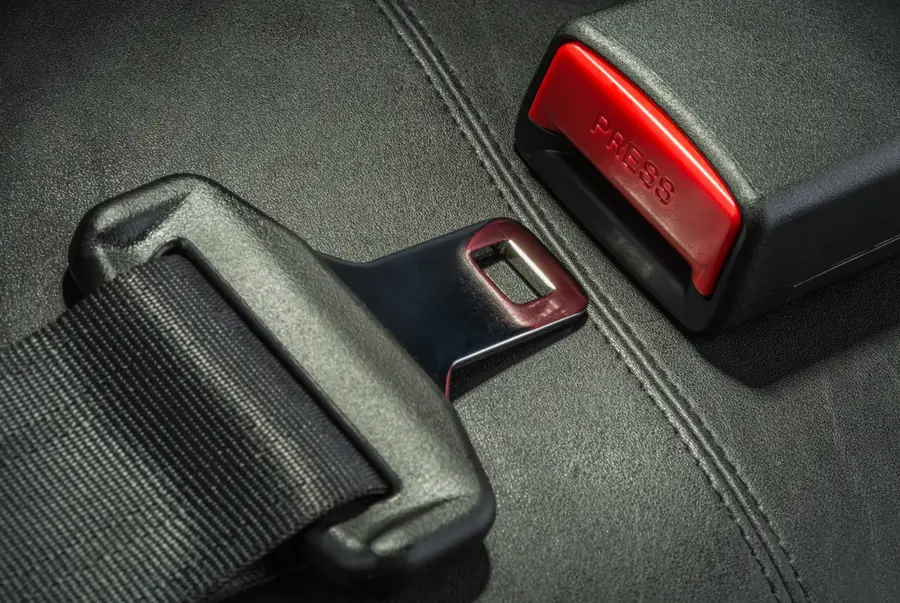 Formats
Different Types of Seat Belt Assemblies
Two-point, three-point, static and retractor formats — what each one is for, and where substituting one for another causes problems.
Read Article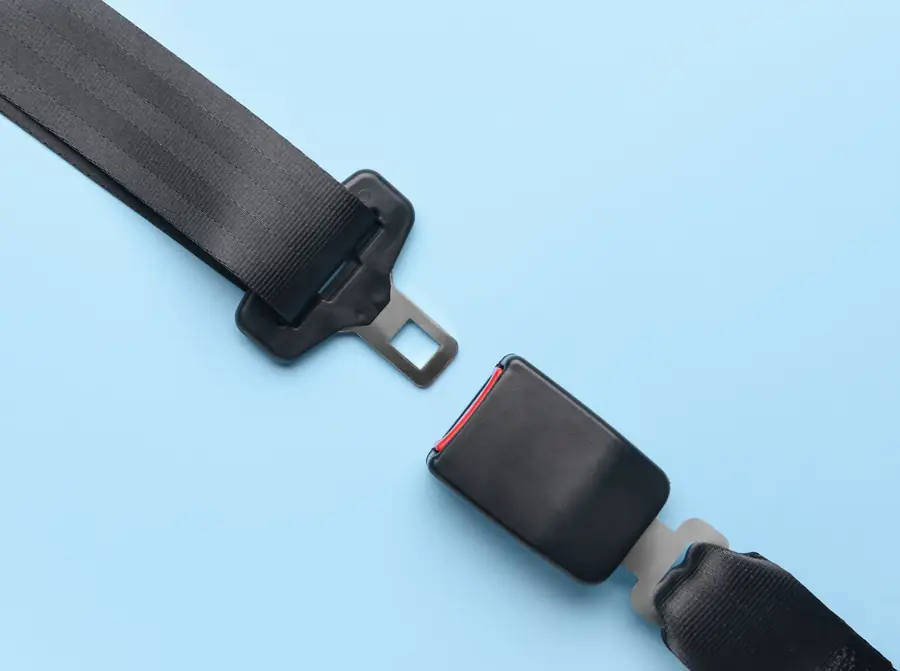 Selection
Factors to Consider When Selecting Seat Belt Components
The measurements and answers that decide whether a part fits — and the assumptions that most often cause a belt to arrive wrong.
Read ArticleWorking out which parts you actually need?
Send us the vehicle or equipment, the seat position and a photograph of the existing belt. We will identify the format and tell you what suits it.